Waterfront, Wired, and Working: How Long Bien's Riverside Residences Are Becoming Southeast Asia's Premier Remote Work Destination
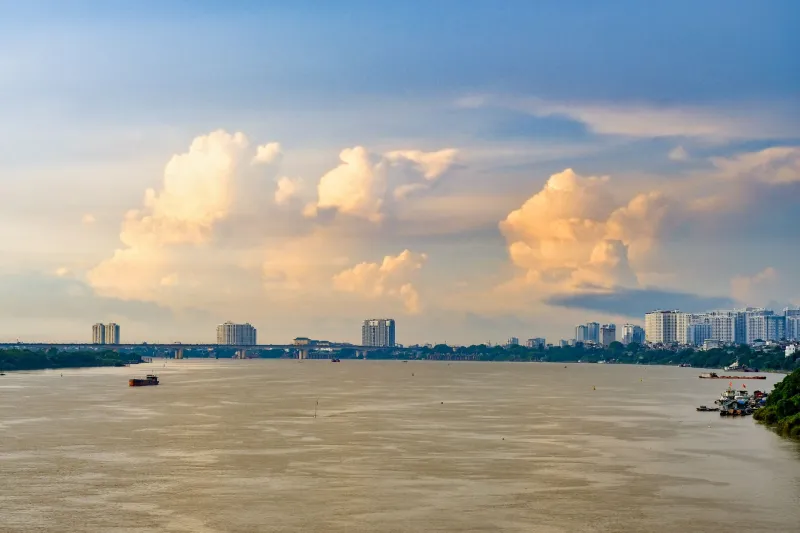
There is a particular kind of morning that Long Bien's waterfront residents describe with almost evangelical consistency. Coffee in hand, laptop open, the Red River spreading wide and bronze through floor-to-ceiling glass — and a fiber connection fast enough to run a Zoom call, render a design file, and stream a Spotify playlist simultaneously. For a growing cohort of American professionals who have untethered themselves from fixed offices, this is not a vacation fantasy. It is a Tuesday.
Long Bien, the district that occupies Hanoi's eastern bank and was long considered the city's utilitarian backside, is undergoing a transformation that has caught the attention of location-independent professionals from San Francisco to Atlanta. Developers have recognized that the remote-work revolution did not simply free people from their offices — it freed them from their zip codes. And Long Bien, with its expanding waterfront corridor, competitive lease rates, and rapidly modernizing infrastructure, is positioning itself as one of Southeast Asia's most compelling permanent bases for the digitally mobile American.
Why the Waterfront Matters Beyond Aesthetics
The appeal of riverside living is obvious on the surface: views, breezes, a sense of openness that dense urban neighborhoods rarely provide. But for remote workers specifically, Long Bien's waterfront developments offer something more functional than scenery. The district's newer residential towers — several of which have risen along the Red River embankment within the past five years — were designed with connectivity as a foundational specification rather than an afterthought.
Buildings such as Vinhomes Riverside and the newer phases of Long Bien's mixed-use corridors have been engineered with dedicated fiber-optic backbone infrastructure, meaning residents are not competing for bandwidth across aging copper lines. In practical terms, this translates to consistent upload and download speeds that meet the demands of video production, software development, financial trading, and any other bandwidth-intensive profession. For American workers accustomed to the unreliable broadband patchwork of many Southeast Asian cities, this reliability is not a luxury — it is a prerequisite.
Beyond connectivity, the waterfront's physical layout offers something that Hanoi's more congested western districts simply cannot replicate: space. Apartments in Long Bien's riverside towers frequently offer larger floor plans at price points that would be inconceivable in comparable Tay Ho or Hoan Kiem properties. A two-bedroom unit with a dedicated home office alcove, river-facing balcony, and access to building-wide amenities can be secured at monthly lease rates that represent a fraction of what a comparable setup would cost in Austin, Denver, or Brooklyn.
Flexible Leases and the New Residential Contract
The remote-work demographic has also accelerated a shift in how Long Bien's property managers and developers structure tenancy agreements. Historically, Hanoi's premium residential market favored annual leases with limited flexibility — a model that suited corporate relocation packages but frustrated independent professionals who needed the freedom to reassess their living arrangements on shorter cycles.
That rigidity is eroding. Several of Long Bien's waterfront and near-waterfront developments now offer furnished units on six-month terms, with options to extend or adjust based on occupancy needs. Some buildings have introduced tiered lease structures that allow tenants to begin on a shorter commitment and migrate to annual pricing once they have confirmed the fit. For an American arriving in Hanoi for the first time, this removes a significant barrier to choosing Long Bien as a trial base before committing to a longer residency.
Property management firms operating in the district have also grown more sophisticated in their understanding of what Western tenants require at move-in. Fully equipped home office setups — ergonomic desk chairs, monitor arms, dedicated UPS battery backups to guard against occasional power fluctuations — are increasingly available as standard or optional furnishing packages rather than custom negotiations.
Amenities That Serve the Working Day
The amenity profile of Long Bien's waterfront developments has evolved to reflect the rhythms of the remote professional's daily life rather than the weekend-leisure model that defined earlier luxury residential design in Vietnam. Rooftop co-working lounges with standing desks and private video-call booths sit alongside traditional swimming pools. Café-style communal kitchens on amenity floors allow residents to shift their working environment without leaving the building — a psychological benefit that experienced remote workers understand intuitively.
Outdoor running paths along the Red River embankment provide the kind of mid-afternoon reset that a commute once inadvertently supplied. Several developments have entered partnerships with cycling rental operators, giving residents access to the growing network of riverside bike lanes that the Hanoi municipal government has been expanding as part of a broader urban mobility initiative. For Americans who structure their workdays around physical movement — a habit that remote work can otherwise erode — this infrastructure matters.
The surrounding neighborhood has adapted in parallel. Independent coffee shops offering reliable Wi-Fi and power outlets have multiplied along Long Bien's main commercial corridors. Western-style grocery options have expanded, and a growing number of English-language fitness studios and wellness centers have established themselves within easy reach of the waterfront residential clusters.
Reshaping the Market From the Inside Out
The influx of American remote workers is not merely a demographic footnote — it is actively reshaping Long Bien's residential market in ways that benefit both incoming tenants and existing property holders. Demand for Western-standard finishes, reliable building management, and English-language service has pushed developers to raise baseline specifications across the district. Properties that might previously have been marketed solely to Vietnamese buyers or traditional corporate expats are now being positioned and designed with the independent international professional as a primary audience.
This shift has created a virtuous cycle. As the concentration of English-speaking, professionally mobile residents grows, ancillary services follow: co-working spaces, international healthcare clinics, English-language community groups, and the informal knowledge networks that help new arrivals navigate visa requirements, tax considerations, and the practicalities of building a life abroad.
For American professionals evaluating their options across Southeast Asia — Bali, Chiang Mai, Ho Chi Minh City, and a dozen other cities compete for this demographic's attention — Long Bien's waterfront corridor offers a combination that few rivals can match: genuine urban infrastructure, cultural richness, lower cost of living than comparable Asian capitals, and a residential product that has been deliberately engineered for the way they actually work.
The Red River view, it turns out, is not the pitch. It is the reward.