Old Bones, New Architecture: How Long Bien's Developers Are Building a Future Without Forgetting the Past
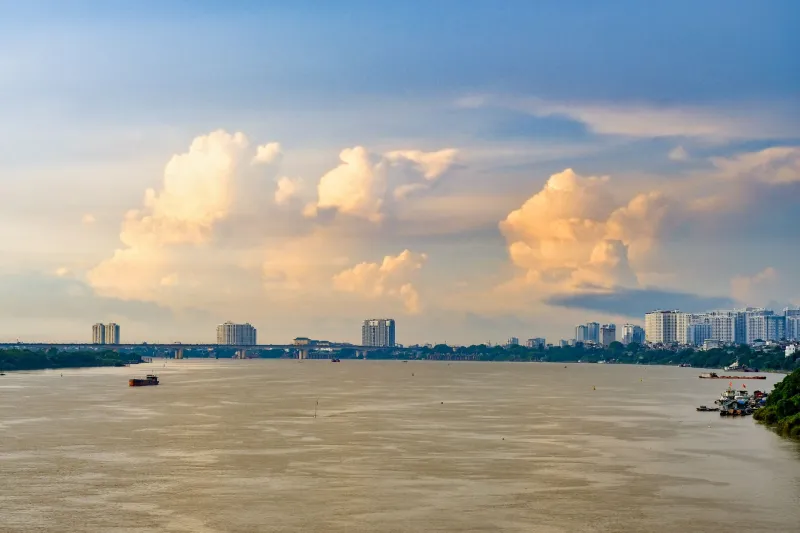
There is a particular quality of light in Long Bien in the early morning — soft, diffuse, filtered through the canopy of century-old trees that line streets the French first paved during the colonial era. Stand at the right vantage point and you can see the old Long Bien Bridge, its latticed iron silhouette unchanged since it was completed in 1903, framing a river that has witnessed dynasties, wars, and now, a quieter but no less significant transformation: the emergence of a modern residential district that takes its heritage seriously.
At Long Bien Centrals, we have watched this transformation unfold with genuine admiration. What is happening architecturally and culturally in Long Bien is not the blunt erasure that has defined development in so many of Asia's rapidly growing cities. It is something more considered — a conversation between eras, conducted in brick, glass, landscaping, and light.
The Heritage Context: What Long Bien Carries Forward
To appreciate what today's developers are working with — and working around — one must first understand the layered history embedded in Long Bien's urban fabric. The district carries the imprint of multiple civilizations. Pre-colonial Vietnamese architectural traditions are visible in the district's older communal houses and temple complexes, structures that reflect a building philosophy centered on harmony with natural surroundings, the use of local materials, and the integration of community space into domestic life.
The French colonial period introduced a different aesthetic vocabulary: high ceilings designed to manage tropical heat, louvered shutters, arcaded ground floors, and a palette of ochre and cream that has become synonymous with Hanoi's visual identity. These buildings were not merely imported European forms — they were adaptations, hybrids that absorbed local climate conditions and, over time, local cultural rhythms.
For American visitors or prospective residents, the closest cultural analog might be the preserved historic districts of New Orleans or Savannah, Georgia — places where architectural heritage is not simply preserved in amber but actively inhabited, where old buildings host new lives. Long Bien operates with a similar vitality, and the best of its new developments have studied that precedent carefully.
Design Philosophy: The Principle of Contextual Respect
The phrase most frequently employed by architects working in Long Bien's premium development segment is "contextual respect" — a design orientation that does not mandate imitation of historical forms but requires meaningful acknowledgment of them. This manifests in several ways across the district's newer residential and commercial properties.
Material continuity is one of the most visible expressions of this philosophy. Where older Long Bien structures employed locally sourced brick and ceramic tile, several contemporary developments have incorporated these same materials into facades, courtyard walls, and interior feature elements. The result is not pastiche — the buildings are unmistakably contemporary in their massing and proportion — but they carry a textural warmth that glass-and-steel construction alone cannot achieve.
Scale sensitivity is another recurring design consideration. Long Bien's established streetscapes are predominantly low-to-mid-rise, a human-scale environment that encourages pedestrian engagement and preserves sightlines to landmark structures, including the bridge and several significant temple complexes. Thoughtful developers have honored this scale in their podium designs and street-level programming, reserving tower heights for interior portions of their sites where they do not overwhelm the existing urban grain.
Green Space as Cultural Continuity
Perhaps the most resonant expression of heritage-conscious design in Long Bien's new developments is the treatment of green space. Traditional Vietnamese domestic architecture placed significant emphasis on courtyard gardens — intimate, carefully composed natural environments that served both functional and spiritual purposes. They were spaces for cultivation, contemplation, and community gathering.
Several of Long Bien Centrals' featured properties have drawn directly on this tradition in their amenity programming. Rather than the generic rooftop pool and fitness center combination that has become the default luxury residential offering across Southeast Asia, these developments have invested in curated garden environments — spaces that incorporate native plantings, water features, and shaded gathering areas that echo the spatial logic of traditional Vietnamese courtyards while serving contemporary social needs.
For American residents accustomed to the increasingly sterile sameness of luxury apartment amenities from Dallas to Denver, this design intentionality is genuinely refreshing. It signals that the people who designed these spaces were thinking about place, not merely product.
The Long Bien Bridge as Symbolic Anchor
No discussion of Long Bien's architectural identity is complete without acknowledging the bridge that gave the district its name. The Long Bien Bridge — designed by the Daydé & Pillé engineering firm and completed under French colonial administration — has survived American bombing campaigns, decades of deferred maintenance, and the relentless pressure of a city that keeps growing around it. It remains in partial use today, carrying motorcycles and pedestrians across the Red River with the unhurried dignity of something that has outlasted everything thrown at it.
For Long Bien's new residential developments, the bridge functions as more than a landmark. It is a symbolic anchor — a physical argument that durability, craftsmanship, and structural integrity are values worth aspiring to. Several of the district's premium properties have oriented terraces, common areas, and high-floor residential units to frame views of the bridge deliberately, incorporating it into the daily visual experience of residents in a way that connects contemporary domestic life to a longer historical narrative.
This is exactly the kind of design decision that transforms a property from a transaction into a home.
Living at the Intersection: The Resident Experience
For international residents — including the growing number of American expatriates working in Hanoi's expanding technology, education, and diplomatic sectors — Long Bien's blend of heritage character and modern infrastructure offers a living experience that is genuinely difficult to replicate elsewhere in the city.
The district's café culture, which has flourished in converted colonial-era shophouses and newer boutique spaces that adopt their aesthetic cues from the same tradition, provides a social environment that feels rooted rather than transient. Weekend markets celebrate local craft and culinary traditions. Community events organized around the district's temples and communal houses maintain the social rhythms that have defined Long Bien's neighborhoods for generations.
Against this backdrop, the district's modern residential developments offer the amenity standards — reliable infrastructure, air-conditioning systems designed for tropical climates, international-grade kitchen fittings, high-speed connectivity — that professional expatriates and discerning local buyers require. The combination is not a compromise. It is a genuine synthesis.
A Model for Responsible Urban Growth
Long Bien is not a perfect place, and its development has not been without tensions. The pace of change creates pressures on existing communities, and not every project has navigated the heritage-modernity balance with equal care. These are honest complications that deserve acknowledgment.
But at its best, what is happening in Long Bien represents a model for how rapidly urbanizing Asian cities can grow without amnesia — without discarding the physical and cultural inheritance that makes a place worth living in. The district's finest new developments demonstrate that contemporary comfort and historical character are not competing values. Pursued with sufficient intelligence and intention, they are complementary ones.
For those considering a home in Hanoi, Long Bien Centrals invites you to experience this balance firsthand. The bridge is still standing. The light is still extraordinary in the morning. And the best of what is being built here is designed to last just as long.