Retiring on Two Continents: How Long Bien Real Estate Is Reshaping the American Expat's Financial Future
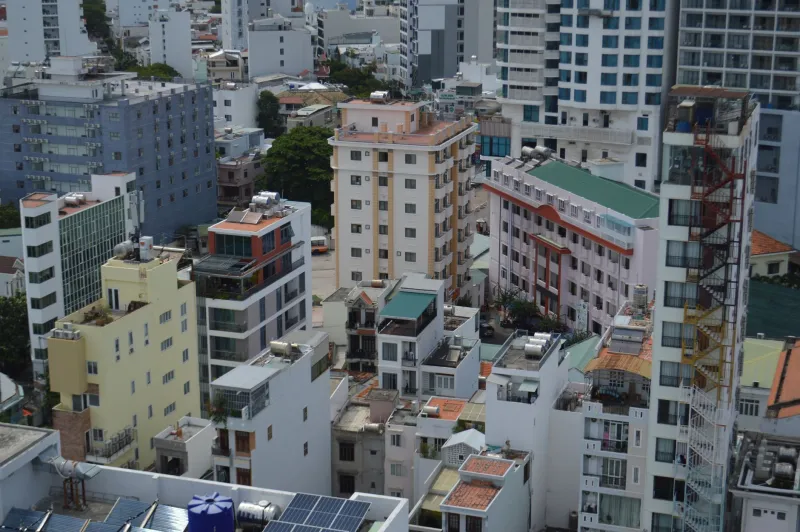
The retirement planning conversation in America has grown considerably more complicated over the past generation. Traditional frameworks — accumulate in tax-advantaged accounts, transition to bonds as you age, draw down in a single location — were designed for a world where retirees stayed put. They were not designed for the growing cohort of Americans who have discovered that the most financially efficient and personally fulfilling version of retirement involves more than one country.
For those individuals, Long Bien is emerging as a uniquely compelling piece of the puzzle.
The Split-Residency Reality
The profile of the American dual-residency retiree is more varied than popular imagination suggests. It includes former corporate professionals who spent careers in international roles and found Southeast Asia more congenial than they expected. It includes digital entrepreneurs who relocated during their working years and have no intention of abandoning a life they deliberately constructed. It includes couples in their late fifties and early sixties who have done the arithmetic on their Social Security projections and concluded, sensibly, that $2,200 a month stretches considerably further in Hanoi than in Phoenix.
What these individuals share is a need for a financial architecture that functions across two jurisdictions, two currencies, and two radically different cost structures. Long Bien property ownership addresses several of the most persistent structural challenges that architecture presents.
The Cost-of-Living Arbitrage and Why It Compounds
The foundational appeal of Long Bien as a retirement base is not subtle. A quality two-bedroom apartment in a well-maintained Long Bien development can be secured for monthly rents that represent a fraction of comparable housing costs in virtually any US metropolitan area. Dining, transportation, healthcare, and daily services are similarly priced at levels that allow a comfortable, even generous, lifestyle on income that would feel constrained in the United States.
For retirees drawing from fixed income sources — Social Security, pension distributions, or required minimum distributions from retirement accounts — this cost differential is not merely convenient. It is transformative. A monthly income that barely covers housing and essentials in Chicago or San Diego can fund a genuinely comfortable life in Long Bien, with meaningful discretionary spending remaining.
The compounding dimension of this arbitrage is frequently underappreciated. Every dollar not spent on living costs in Long Bien is a dollar that remains invested in US-denominated assets, continuing to grow. Over a retirement horizon of twenty or thirty years, the difference between drawing down a portfolio in a high-cost domestic environment versus a low-cost international one can be measured in years of additional financial security.
Property Ownership as a Currency Hedge
Americans living abroad carry an inherent currency exposure that requires active management. When the Vietnamese dong strengthens against the US dollar — as it has, with fluctuation, over the medium term — the purchasing power of dollar-denominated income in Vietnam decreases. This is a risk that purely cash-based expat retirees cannot easily neutralize.
Owning Long Bien property introduces a natural hedge. Real estate assets are denominated in local currency terms. As the dong appreciates, the dollar value of a Long Bien property holding increases correspondingly, offsetting the erosion of purchasing power on the income side. For retirees who intend to maintain a permanent or semi-permanent presence in Vietnam, this hedge has genuine structural value.
It is worth noting that Vietnamese real estate, broadly, has demonstrated a pattern of dong-denominated appreciation that has outpaced inflation over the medium term in urban markets. Long Bien's specific trajectory has been particularly pronounced. For Americans thinking about currency exposure across a multi-decade retirement, a Long Bien property holding functions as both a lifestyle asset and a currency position — a dual utility that few other instruments can replicate.
Tax-Efficient Withdrawal Strategies for the Dual Resident
The tax dimension of dual-residency retirement planning is where professional guidance becomes non-negotiable, and where the decisions made in the early years of an international retirement can have disproportionate long-term consequences.
Americans remain subject to US federal tax obligations regardless of where they reside — a fact that distinguishes American expats from those of virtually every other nationality and that requires deliberate planning rather than assumption. The existence of a US-Vietnam tax treaty provides certain protections and eliminates some categories of double taxation, but navigating its provisions requires expertise.
For retirees managing withdrawals from traditional IRAs or 401(k) plans, the question of whether to accelerate withdrawals during years when Vietnam-sourced income is low — potentially at favorable marginal rates — versus deferring to required minimum distribution schedules is one that repays careful analysis. Similarly, the treatment of rental income from Long Bien properties on US tax returns, and the application of the Foreign Tax Credit to any Vietnamese taxes paid on that income, involves complexities that a qualified international tax advisor can help structure advantageously.
The general principle that experienced advisors in this space consistently articulate is that the tax efficiency of a dual-residency retirement is not automatic — it is engineered. Americans who invest the time and professional fees to structure their affairs correctly frequently find that their effective tax burden is materially lower than it would have been in a purely domestic retirement scenario.
The Lifestyle Economics of Owning in Long Bien
Beyond the financial mechanics, there is a quality-of-life dimension to Long Bien property ownership that resists reduction to spreadsheet terms but deserves acknowledgment.
Long Bien offers a version of urban life that is genuinely difficult to find in comparable price ranges anywhere in Asia's gateway cities. The district combines the energy and amenity richness of a major metropolitan area — Hanoi's cultural institutions, international dining, healthcare infrastructure, and business ecosystem are all accessible — with a residential character that is notably less frenetic than central Hanoi's most congested neighborhoods.
For retirees who have spent careers in high-pressure urban environments and are seeking a calibrated deceleration rather than a complete withdrawal from city life, this balance is meaningful. The Red River's proximity provides both aesthetic pleasure and a genuine sense of geographic anchoring. The district's evolving café culture, international school presence, and growing community of fellow expatriates from the US and elsewhere create a social fabric that supports the kind of engaged, purposeful retirement that research consistently identifies as most conducive to long-term wellbeing.
Owning, rather than renting, in this environment introduces a further dimension: the psychological security of permanence. An owned Long Bien apartment is not subject to the lease renewals, rent increases, and landlord decisions that create uncertainty for long-term renters. It is a base, in the fullest sense of the word — a place from which the dual-residency life can be organized and enjoyed with confidence.
Maintaining Stateside Options
A well-designed dual-residency retirement does not require abandoning American life. It requires structuring that life intelligently across two geographies.
Many Long Bien-based American retirees maintain US-based assets — a paid-off property, a brokerage account, family connections — that they return to seasonally. The financial efficiency of spending six to eight months annually in Long Bien, where the cost of living is dramatically lower, can effectively subsidize a comfortable stateside presence during the remaining months. This rhythm, once established, tends to feel less like a compromise than a genuine expansion of what retirement can be.
Long Bien's position as a stable, appreciating, income-capable asset class makes it an unusually versatile component of that architecture. It can serve as a primary residence, a rental income source during stateside periods, or an eventual legacy asset. Few real estate markets offer that range of functional flexibility at Long Bien's current price points.
For Americans willing to think creatively about what retirement geography can look like, the district's proposition is difficult to dismiss.
